
Wire an ESP32 or Arduino to a Delta DVP PLC over RS-485, switch COM2 to Modbus RTU, and read or write D, M and Y...
Latest posts
-
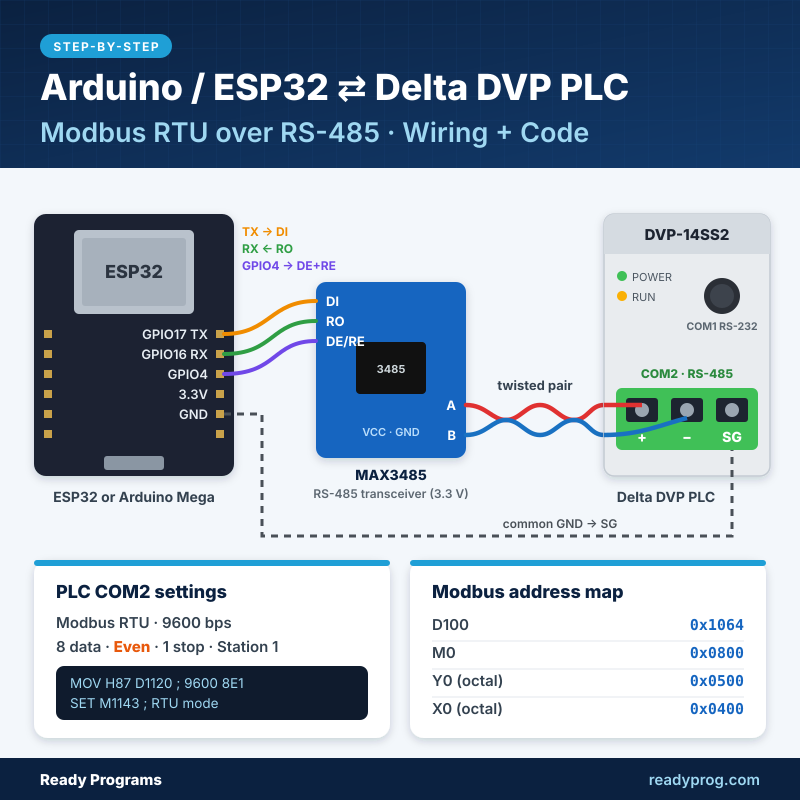 How to Connect an Arduino or ESP32 to a Delta DVP PLC with Modbus RTU (RS-485)Read more
-
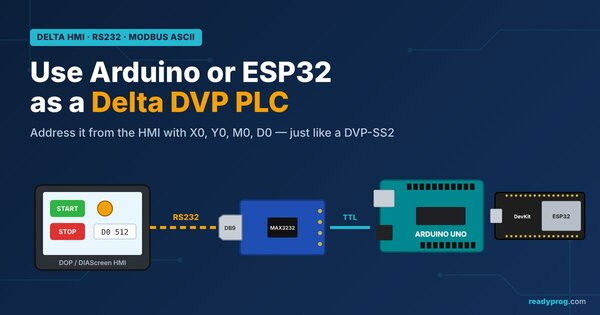 Use Arduino or ESP32 as a Delta DVP PLC: Control It from a Delta HMI via RS232Read more
Turn an Arduino or ESP32 into a Delta DVP-SS2 PLC that your Delta HMI talks to over RS232. Design screens with X0,...
-
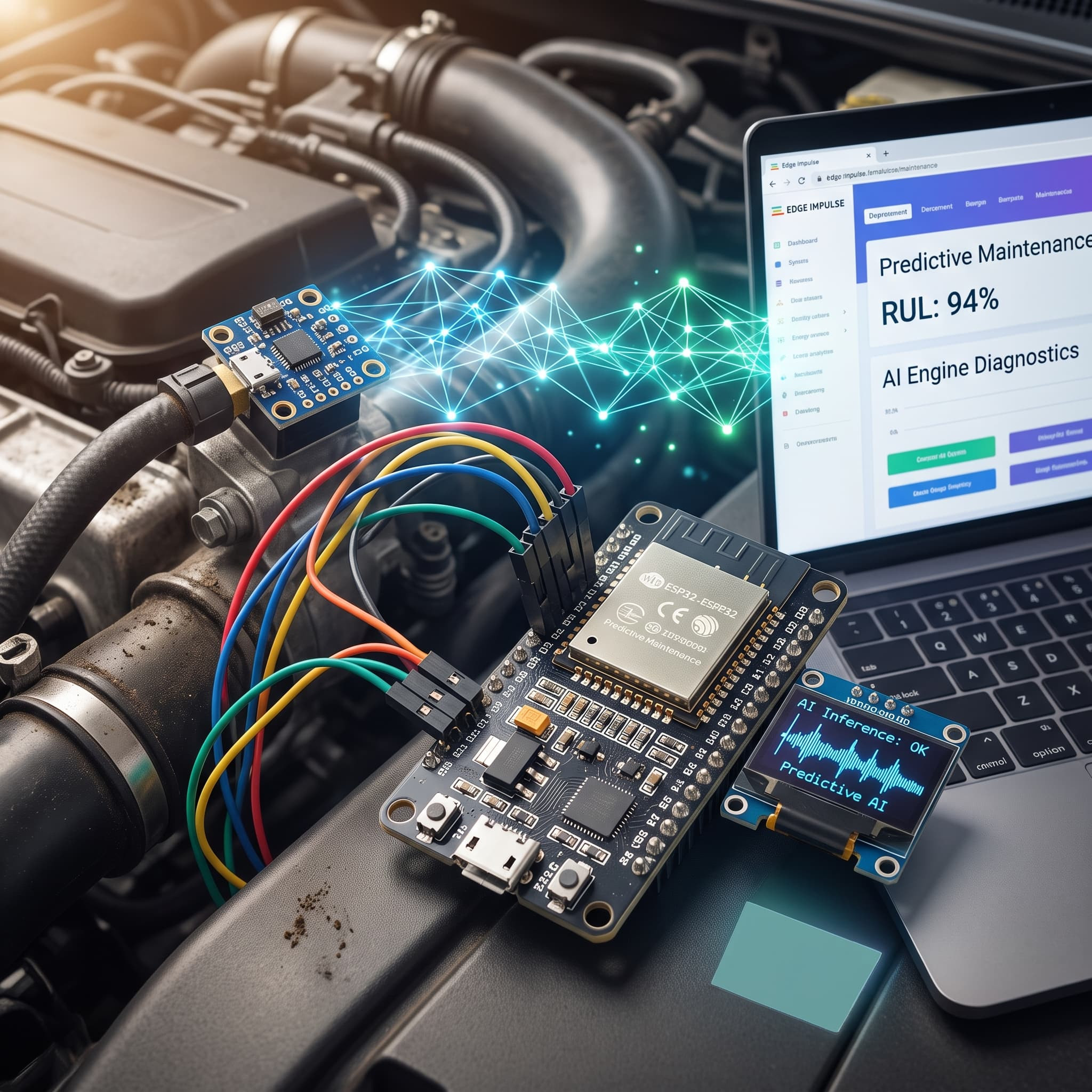 How AI Dictates When Mechanical Parts Must Be Replaced in Automotive and AerospaceRead more
Discover how Edge AI and microcontrollers like the ESP32 are revolutionizing vehicle and aerospace diagnostics. By...
-
 How to Choose a Graduation Project Idea in Computer Science & Software Engineering (2026 Guide)Read more
A practical, step-by-step guide to choosing a winning graduation project idea in computer science or software...
-
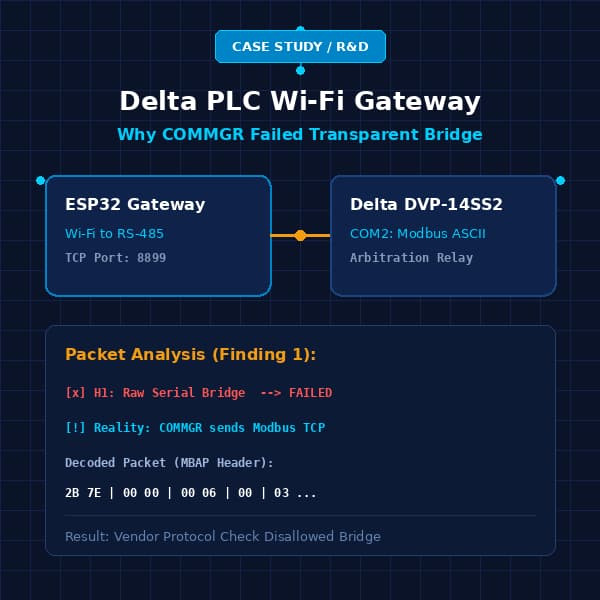 A Failed Wi-Fi Gateway for a Delta PLC: What a Packet Log Taught Me About Unverified AssumptionsRead more
I designed a sub-$7 wireless programming gateway for a Delta DVP-14SS2 PLC (ESP32, RS-485 transceiver, arbitration...
Blog categories
Search in blog
Archived posts
How AI Dictates When Mechanical Parts Must Be Replaced in Automotive and Aerospace
From Preventive to Predictive: How Edge AI and ESP32 Determine Mechanical Component Lifespans in Automotive and Aerospace
For decades, mission-critical mobility sectors like automotive and aerospace have operated on rigid, calendar- or mileage-based maintenance schedules. Today, the rapid maturation of the Industrial Internet of Things (IIoT), Edge AI, and low-cost microcontrollers such as the ESP32 is fundamentally transforming that strategy: shifting the industry from scheduled preventive maintenance to AI-driven Predictive Maintenance (PdM).
1. The Paradigm Shift: Why Traditional Maintenance Falls Short
To grasp the technical transformation, consider the three core maintenance philosophies:
- Reactive Maintenance (Run-to-Failure): Repair occurs only after a component fails. This is unacceptable in aviation and devastating to commercial automotive logistics due to catastrophic secondary damage.
- Preventive Maintenance (Time/Mileage-Based): Swapping parts at predetermined intervals (e.g., changing brake pads every 20,000 km or inspecting turbine bearings every 3,000 flight hours). The flaw: It assumes identical stress loads. Healthy components with 30%–40% usable life are frequently discarded prematurely, while components under harsh stress risk sudden failure before scheduled replacement.
- Predictive Maintenance (Condition-Based): Continuous, real-time telemetry monitors the component. AI models calculate the precise Remaining Useful Life (RUL), scheduling replacement only when degradation crosses an operational threshold.
2. Engineering Architecture: How the Pipeline Works
Moving from raw vibration to prescriptive maintenance requires four synchronized engineering stages:
A. Telemetry and Sensor Acquisition
Micro-Electro-Mechanical Systems (MEMS) accelerometers (such as the ADXL345 or MPU6050) and piezoelectric vibration sensors are coupled to critical rotating components (bearings, shafts, engine mounts, and gearbox housings). Data is acquired via high-speed I2C or SPI buses directly to the ESP32 microcontroller.
B. Digital Signal Processing (DSP) & Feature Extraction
Raw vibration time-series data consumes excessive memory and bandwidth. Embedded DSP pipelines process signals locally:
- Fast Fourier Transform (FFT): Translates acceleration signals into the frequency domain to identify distinct harmonic peaks associated with bearing raceway or gear teeth defects.
- Statistical Extraction: Measures Root Mean Square (RMS), Crest Factor, and Kurtosis to quantify energy distribution and transient shocks.
C. TinyML Inference on ESP32
Using frameworks like TensorFlow Lite for Microcontrollers or Edge Impulse, quantized neural networks (8-bit integer weights) execute inferences directly on-chip. Unsupervised autoencoders detect anomalous drift from normal baseline operation, while regression models estimate RUL curves based on cumulative stress cycles.
D. Prescriptive Dispatch
Instead of vague warnings, the edge node publishes structured diagnostic packets over MQTT, CAN bus, or Wi-Fi to SCADA and fleet ERP systems: "Axle Bearing #2 degradation index reached 0.82. Estimated RUL: 110 operational hours. Recommended maintenance scheduled at next regular service depot stop."
3. Automotive vs. Aerospace Implementations
| Metric | Automotive Applications | Aerospace Applications |
|---|---|---|
| Primary Buses | CAN bus, CAN-FD, Automotive Ethernet | ARINC 429, ARINC 629, AFDX, MIL-STD-1553 |
| Computing Topology | Distributed Zonal ECUs & Edge nodes | Integrated HUMS (Health & Usage Monitoring) + Post-flight Cloud Sync |
| Safety Standards | ISO 26262 (ASIL A–D) | DO-178C (Software) / DO-254 (Hardware) |
| Primary Value Driver | Fleet uptime, warranty reduction, lower TCO | Zero-incident flight safety, elimination of Aircraft on Ground (AOG) |
4. Tangible Operational Benefits
- Full Asset Lifespan Extraction: Cuts parts waste by up to 35% by preventing early retirement of healthy components.
- Downtime Elimination: Reduces unplanned, catastrophic mechanical failures by up to 70%.
- Just-in-Time Spare Parts Logistics: Replacement parts and technician schedules are synchronized precisely to the predicted failure horizon.
By shifting computational intelligence from distant data centers directly onto edge microcontrollers like the ESP32, predictive maintenance is converting reactive machinery into self-aware, intelligent mechanical assets.
Posted in:
Projects Under Discussion
Related posts
-
A Failed Wi-Fi Gateway for a Delta PLC: What a Packet Log Taught Me About Unverified Assumptions
I designed a sub-$7 wireless programming gateway for a Delta DVP-14SS2 PLC (ESP32, RS-485 transceiver, arbitration...Read more
-
Use Arduino or ESP32 as a Delta DVP PLC: Control It from a Delta HMI via RS232
Turn an Arduino or ESP32 into a Delta DVP-SS2 PLC that your Delta HMI talks to over RS232. Design screens with X0,...Read more
-
How to Connect an Arduino or ESP32 to a Delta DVP PLC with Modbus RTU (RS-485)
Wire an ESP32 or Arduino to a Delta DVP PLC over RS-485, switch COM2 to Modbus RTU, and read or write D, M and Y...Read more
Leave a comment